QUINEAR Air Compression Recovery System vs. TEETER EP-560 Inversion Table
Real product data from both. Which one earns its place in your gym?
Compression boots for endurance-athlete leg recovery. Inversion table for back decompression and lumbar-disc care.
These are complementary tools at premium prices that solve different recovery problems. Compression boots like QUINEAR's sequential system address leg-specific recovery — venous return, lymphatic drainage, delayed-onset soreness after long runs, rides, or hikes. Inversion tables like the Teeter EP-560 address spinal decompression — gravity-assisted traction for back pain, lumbar disc issues, or chronic tightness from desk work. Neither replaces the other. A marathon runner with back issues needs both eventually; a deadlifter with tight hamstrings and lumbar compression needs the inversion more. Pick by the body complaint driving the purchase.
Pick QUINEAR Air Compression Recovery System when you train endurance — long runs, rides, hikes — and leg recovery quality limits your weekly volume. Compression boots are the legs-first answer.
Pick TEETER EP-560 Inversion Table when you have back pain, disc issues, or chronic lumbar tightness that spinal decompression can address. Inversion tables are the back-first answer.
Which one fits you?
- ✓You run long, ride long, or hike long and leg soreness limits your next session.
- ✓You've felt the recovery effect of sequential compression in a clinic or training facility.
- ✓You have time for 20-30 minute sessions in the evening and you commit to using them.
- ✓Legs are the recovery bottleneck for your training.
- ✓You have back pain or disc issues that spinal decompression addresses.
- ✓You sit at a desk for long hours and lumbar compression is chronic.
- ✓You've tried inversion at a chiropractor and you want it at home.
- ✓The back is the primary complaint driving the recovery-tool purchase.
Head-to-head specs
| Spec | QUINEAR Air Compression Recovery System | TEETER EP-560 Inversion Table |
|---|---|---|
| Price | $299.99 | $269.00 |
| Brand | QUINEAR | TEETER |
| Amazon rating | 4.0 out of 5 stars | 4.5 out of 5 stars |
| Reviews | 1,931 | 376 |
| Material | Tributyl Phosphate | Heat Treated Steel |
| Weight | 3 Kilograms | 65 Pounds |
Feature highlights, side by side
-
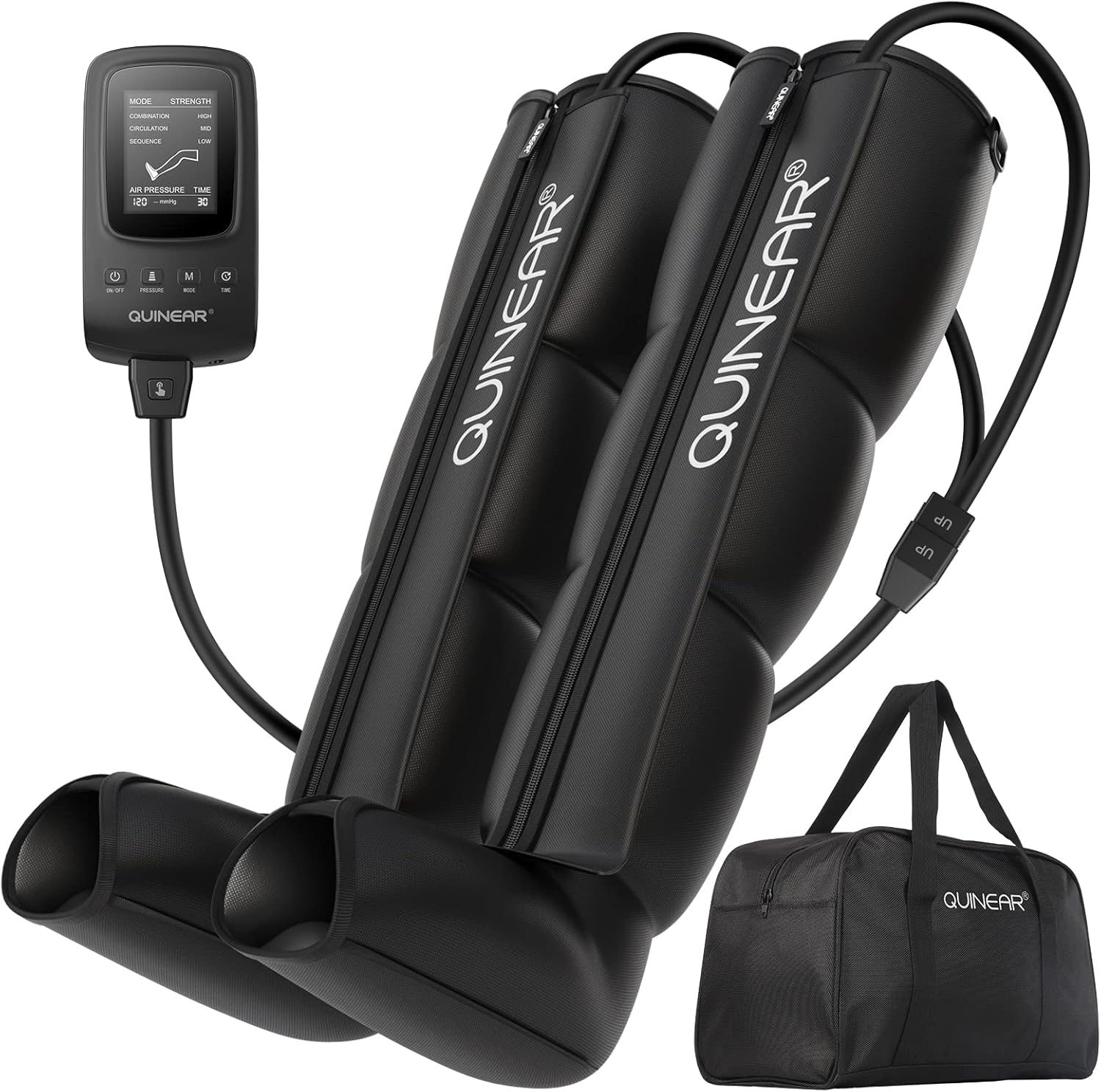
PROFESSIONAL AIR COMPRESSION MASSAGE SYSTEM - QUINEAR legRecovery system is a full-leg massager machine with air compression therapy, it mainly inflate and deflate 4 air chambers (foot/lower calf/upper calf/thigh) to form a circulating pressure on the legs and tissues, and evenly and orderly squeeze the distal end of the limb to the proximal end to improve blood circulation and speed up metabolism
-
SMART SEQUENTIAL MASSAGE BOOTS - QUINEAR sequential compressionDevice upgraded with built-in pressure sensor, which can adjust different pressure value according to different leg sizes. And 4 air chambers inflated and deflated sequentially by full leg coverage with sequence,to bring you more comfortable compression massage experience (no heat control/settings)
-
8 INTENSITIES+3 MODES+3 ADJUSTABLE TIMER - The airCompression device have 8 intensities (50-120 mmHG) and 3 air compression modes (sequence/circulation/combination). According to your needs of everyday massage, you can adjust every therapy session and the treatment time (20/25/30Mins) by digital controller. You just need to zip the recovery boots and start to enjoy air compression massage therapy
-
RELAXATION & REFRESH & RECOVERY - QUINEAR airCompression boot is suitable for athletes, cyclist, runners, sport enthusiast, drivers, waiters, dancers, elderly,or even for everyday massage therapy.It help to improve lymphatic system function, reduce pain and soreness,eliminate fatigue and soothes muscle tension.It is better to athletes for faster workout recovery. Compact size and carry bag made it become your post-workout recovery partner on gym
-
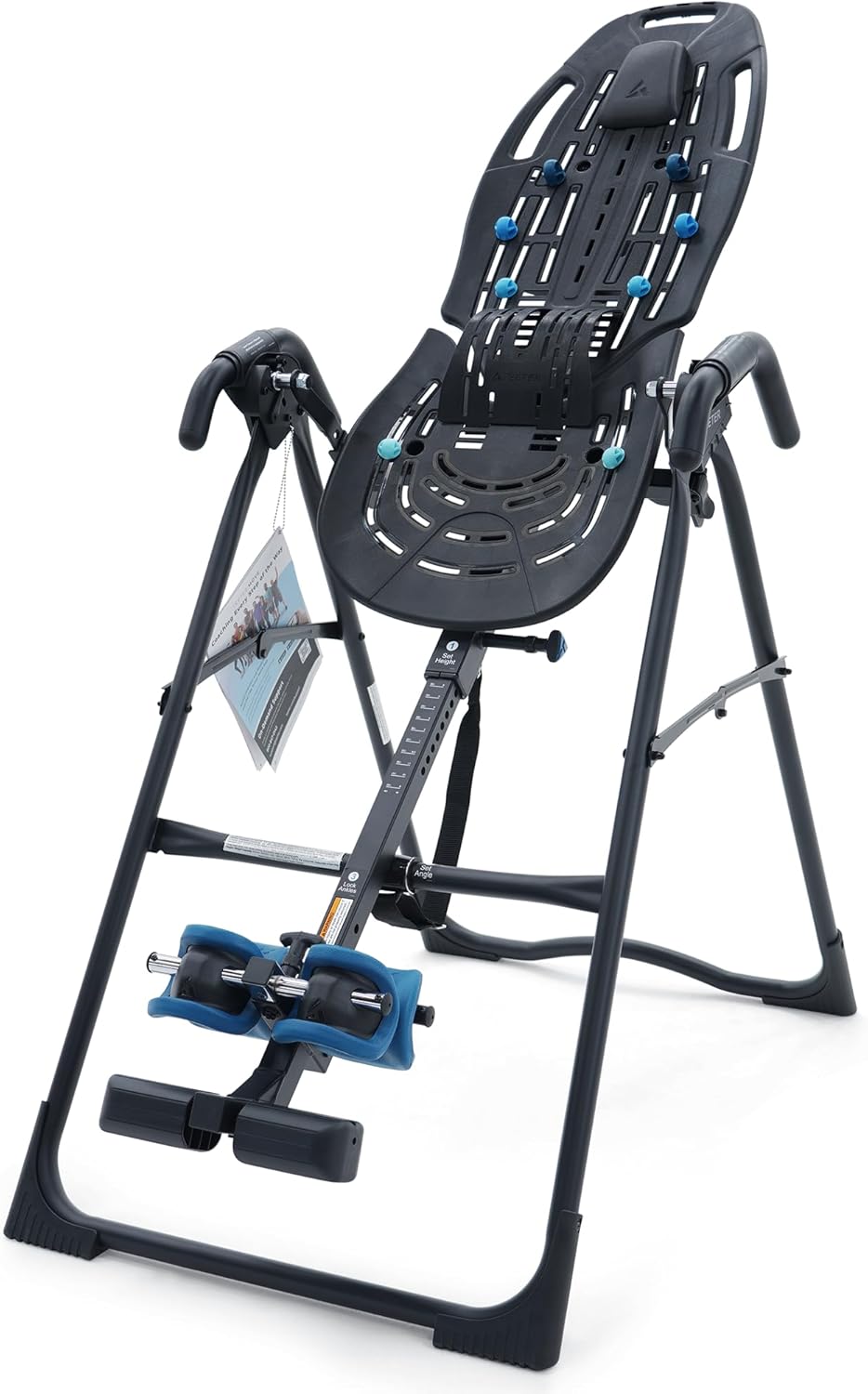
Better Stretch, Better ReliefComforTrak backrest allows maximum body slide for better decompression and flexes for comfort. Grip-and-Stretch Handholds add stretching options.
-
Integrated Accessories Boost BenefitsAcupressure Nodes (8) in varied heights provide trigger-point release and focused relief. Lumbar Bridge with adjustable arch supports and focuses traction on the lower back.
-
Unmatched ComfortPatented wrap-around ankle cups and the easy-dial, 2-position foot platform allow for a customized, ergonomic, and secure fit so you can fully relax and enjoy your stretch.
-
EASY TO USE w/ PRECISION BALANCEEngineered for smooth responsive rotation control, so you can effortlessly invert and return upright with simple arm movements. Easily preset your maximum angle with the adjustable angle tether or remove for optional lock-out in full inversion.