5 Steps to Perfect Bench Press Form
A 5-step guide to safe, effective bench press technique on an adjustable bench. Covers setup, grip, bar path, breathing, and common faults that cause shoulder injuries.
Set the bench angle and position
For flat bench press, lock the bench at 0 degrees. For incline, set it to 30-45 degrees — steeper angles shift the load from chest to shoulders. Position the bench so the bar (or dumbbells) travels directly over your mid-chest. Your eyes should be roughly under the bar at the start position.
Don't set incline steeper than 45 degrees for chest work. Above 45 degrees, you're doing a seated shoulder press, not an incline bench press. The chest contribution drops off sharply.
Plant your feet and set your arch
Feet flat on the floor, shoulder-width apart. Pull your shoulder blades together and down — like you're putting them in your back pockets. This creates a natural arch in your upper back that protects your shoulders and gives you a stable pressing platform. Your butt, upper back, and head all stay on the bench throughout the lift.
The arch is in your upper back, not your lower back. If your butt lifts off the bench, your arch is too aggressive. If your shoulders are flat against the bench, you haven't retracted your scapulae.
Grip the bar at the right width
For barbell bench, grip so your forearms are vertical when the bar touches your chest. Most people land at 1.5x shoulder width. For dumbbells, hold them with a neutral or slight angle — whatever feels natural on your shoulders. Wrists stay straight, directly under the weight.
Too narrow and your triceps take over. Too wide and your shoulders take excessive stress. When the bar is on your chest, your forearms should point straight at the ceiling.
Lower with control, press with intent
Lower the bar (or dumbbells) to your mid-chest in 2-3 seconds. Touch lightly — don't bounce. Press up and slightly back so the bar finishes over your shoulders, not over your face or stomach. The bar path is a slight arc, not a straight vertical line. Exhale on the press, inhale on the lower.
If the bar drifts toward your face on the press, you're flaring your elbows too much. Tuck your elbows 45-75 degrees from your torso. Straight-out elbows (90 degrees) destroy shoulders over time.
Re-rack safely and build volume gradually
Lock your elbows at the top, then guide the bar back to the rack. Don't try to rack with bent elbows — that's how bars get dropped. Start with a weight you can press for 8 clean reps with 2 reps in reserve. Add 5 lbs per session until you can't complete all reps, then hold the weight for 2-3 sessions before progressing again.
Always use a spotter or safety pins when pressing near your limit. A bench with adjustable safety catches (J-hooks) is ideal. Never bench heavy alone without a mechanical safety.
Ready for the barbell? Olympic bars for progression
Dumbbell bench press caps around 100 lbs per hand. When you outgrow that, Olympic barbell bench press is the standard progression — here are three 7-foot bars that cover the next 10+ years of strength work.
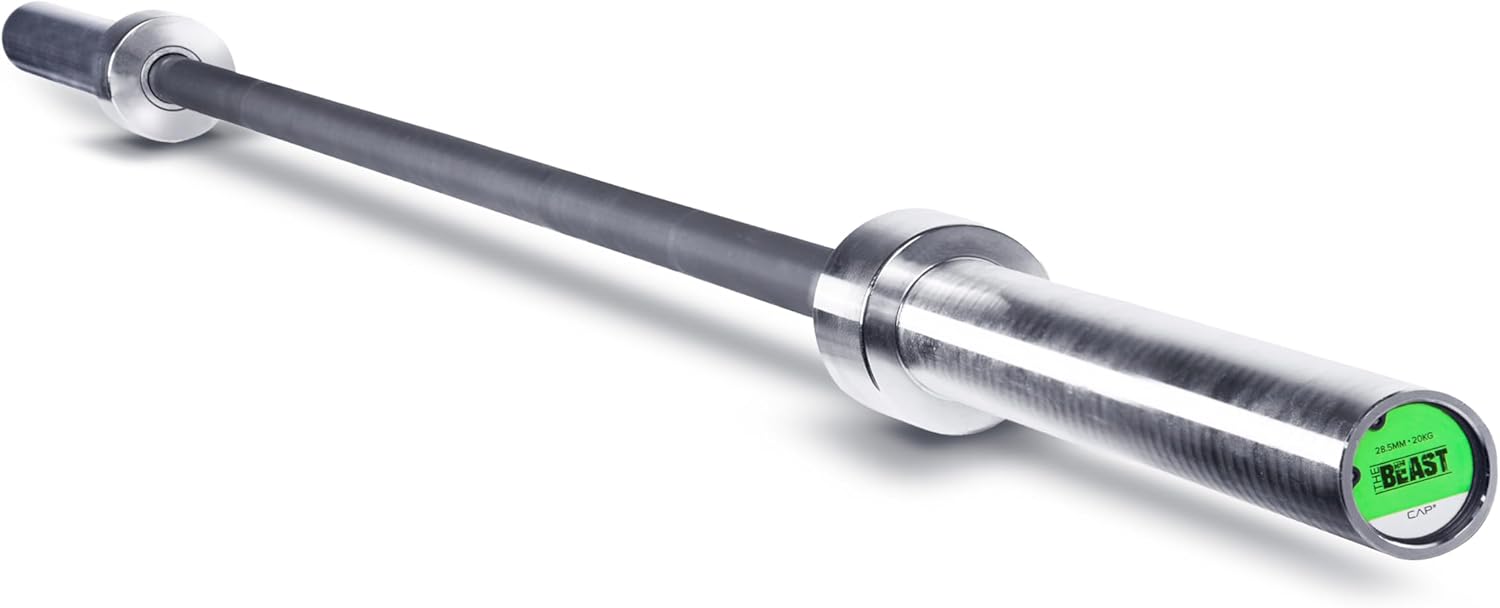
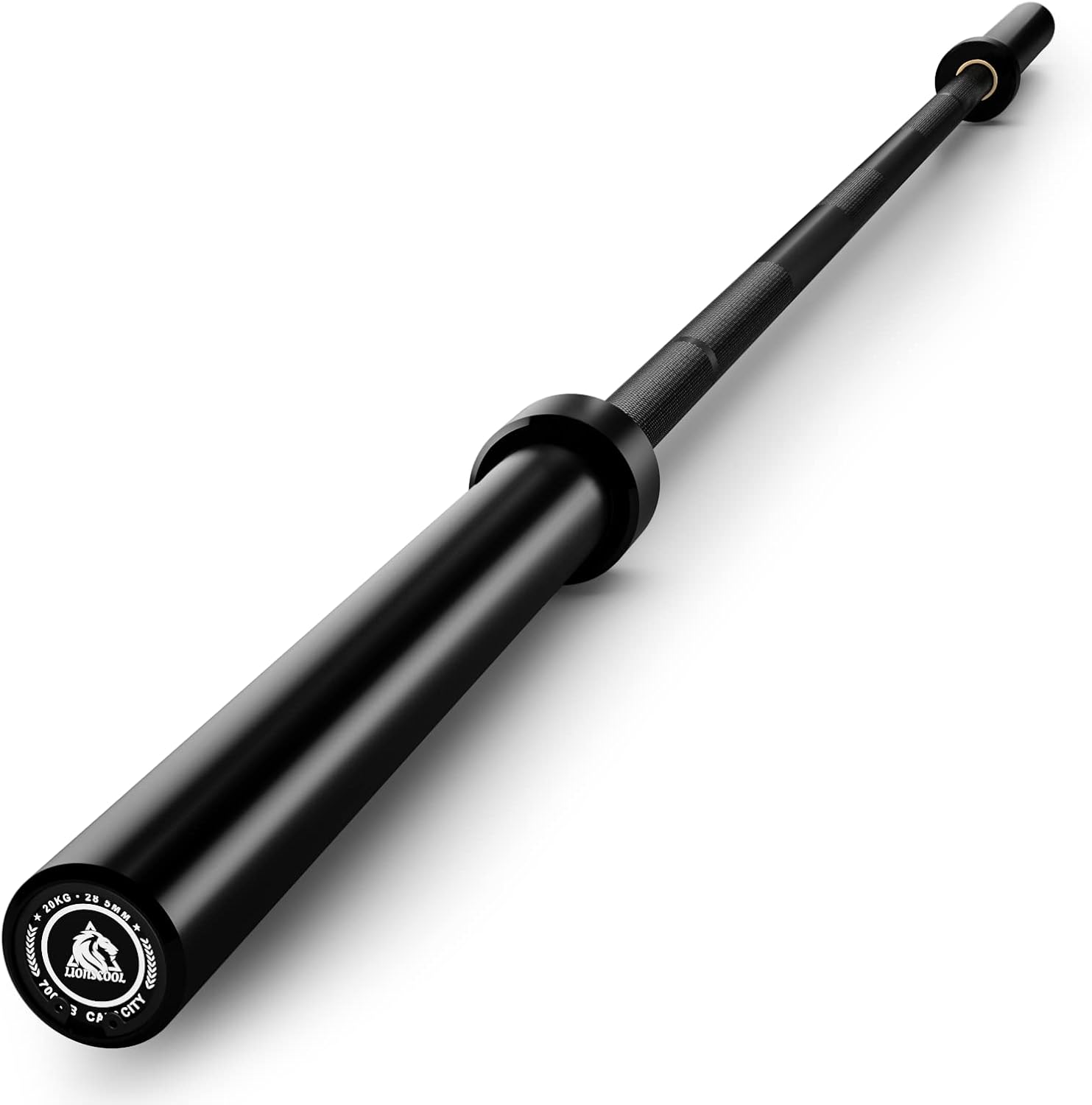
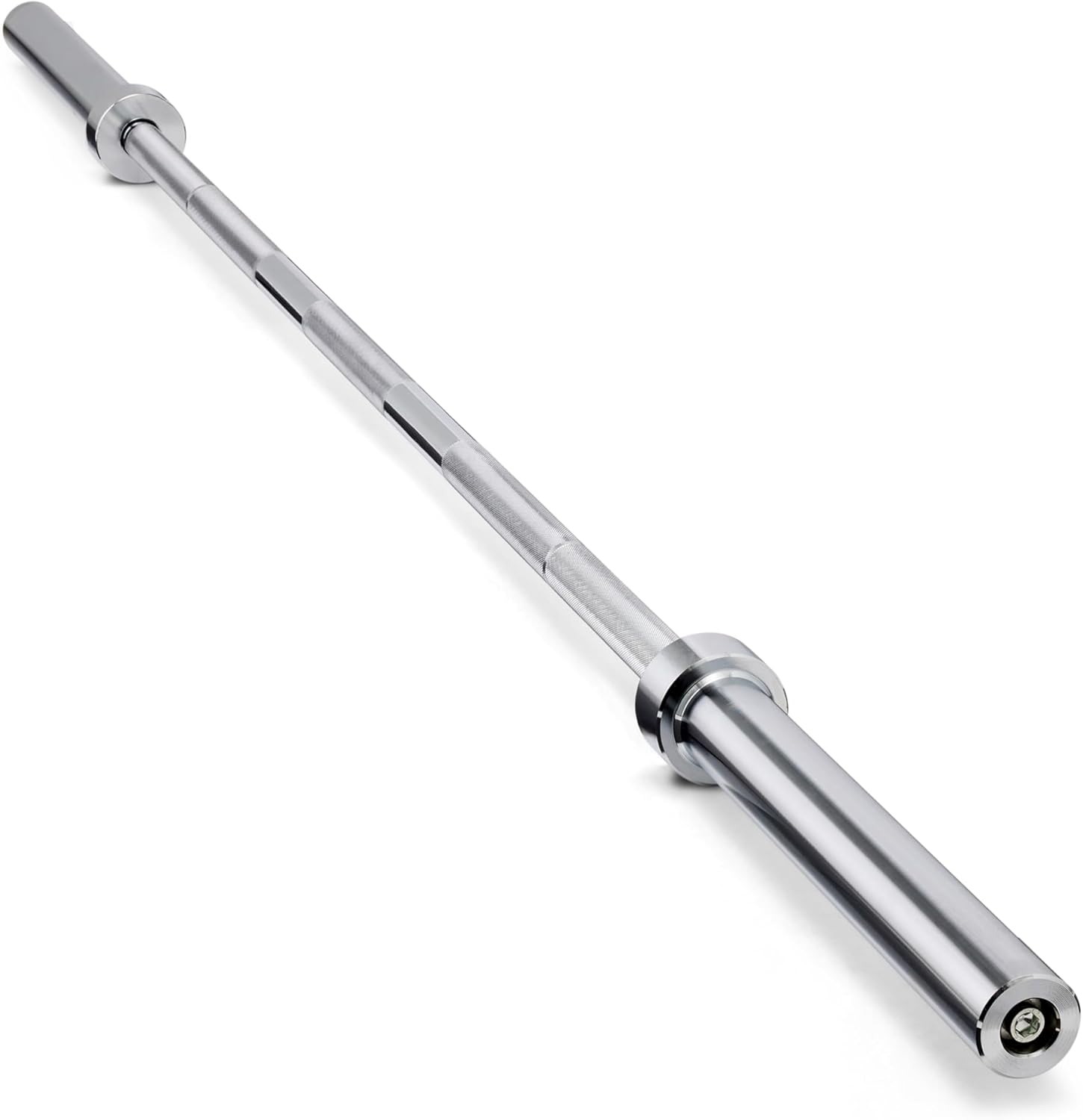
*Tutorials do not constitute professional medical or fitness advice. Please consult a qualified professional before making decisions about your health or fitness routine.